



Parcel spend management software helps shippers audit carrier invoices, analyze and reduce total parcel spend, monitor carrier contract compliance, and model cost decisions before they reach the budget. It goes beyond one-time refund recovery and treats shipping cost as an ongoing discipline rather than a periodic cleanup. The strongest parcel spend management platforms bring audit, analytics, peer comparison, and modeling into a single view.
This guide compares nine parcel spend management software platforms worth evaluating in 2026 to reduce shipping costs: Reveel, Loop, Sifted, Intelligent Audit, TransImpact, Green Mountain Technology, Shipware, Broussard Logistics, and Enveyo. Each fits a different kind of shipper. The right choice depends on shipping volume, operational complexity, and whether a shipper wants software-led self-service or expert-led managed service. The sections below explain how the category works, what each platform does best, and how to match a platform to the highest-impact cost problem.
Key Takeaways
- Parcel spend management is broader than parcel audit. Audit recovers refunds from billing errors and service failures, and parcel spend management adds analytics, contract compliance, and modeling to reduce total spend over time.
- The right parcel spend management platform depends on scale, modes, and whether a shipper wants software-led self-service or expert-led managed service.
- After recovering refunds, the highest-value next step is contract compliance monitoring, which closes the gap between negotiated terms and actual invoices before new overcharges accumulate.
- Reveel is built for shippers who want to get ahead of carrier costs with an AI-driven platform spanning audit, analytics, modeling, and all-modes freight audit and payment.
What Is Parcel Spend Management Software?
Parcel spend management software helps shippers track, audit, analyze, and reduce parcel shipping costs across every carrier in the program. Some shippers use parcel management and parcel audit interchangeably, but there are key differences.
A parcel audit tool checks carrier invoices for billing errors and service failures, then files for refunds. Parcel spend management builds on that recovery work and adds the intelligence layer around it.
That intelligence layer is where parcel spend analysis turns into parcel spend intelligence. Instead of only recovering last month’s overcharges, a parcel spend management platform explains why the charges keep happening, which carriers and lanes drive them, how current rates compare to peers, and what a contract should say to prevent them. Analytics, peer comparison, contract compliance monitoring, and scenario modeling move the work from reactive cleanup to proactive control.
| Parcel Audit | Parcel Spend Management | |
| Primary goal | Recover refunds from billing errors and service failures | Analyze, reduce, and control total parcel spend over time |
| Scope | Invoice audit, refund and claims filing | Audit plus analytics, peer comparison, contract compliance, and modeling |
Why Does Parcel Spend Management Matter More in 2026?
Carrier costs are rising faster than most teams can track them, and the increases no longer arrive in a single predictable event. Parcel spend management has moved from a finance nicety to an operational necessity because the pricing pressure now comes from several directions at once:
- Compounding general rate increases. FedEx and UPS continue to raise general rate increases (GRIs), which requires shippers to have a more proactive approach.
- Changing accessorial and surcharges. GRIs are no longer the whole story. Carriers now push changes throughout the year: mid-year rate adjustments, new shipping surcharges, and definitional changes that expand what qualifies for an existing fee. Residential surcharges, fuel surcharges, and additional handling charges adjust throughout the year and have become a significant part of total shipping spend.
- Systematic invoice errors. Dimensional weight miscalculations, duplicate charges, incorrect service-level billing, and zone errors are not rare events. They appear systematically across high-volume invoices and rarely correct themselves.
- Multi-carrier contract complexity. Tiered pricing, negotiated discounts, and service-level agreements across several carriers produce an invoice stream that is genuinely difficult to audit without purpose-built software.
Individually, any one of these is manageable. Together, they make parcel spend a moving target, which is why parcel spend management belongs on the finance and operations agenda in 2026.
What Features Are Most Important in Parcel Spend Management Software?
Not every platform covers every capability. Before shortlisting vendors, decide which of these features your shipping operation needs now and which it will grow into. The criteria below separate a basic parcel tool from a full parcel spend management platform:
- Automated parcel audit. The platform should analyze every shipment against contracted terms and detect rate errors, duplicate charges, invalid surcharges, dimensional weight discrepancies, and incorrect service-level billing, not a sample of shipments but all of them.
- Refund and claims automation. Flagging an error is only one part of the recovery process. The platform should file, track, and escalate refund claims for billing errors and service failures, and handle lost and damaged claims through the same workflow rather than as a separate manual process.
- Accessorial and surcharge monitoring. Accessorials are now one of the largest and least predictable parts of a shipping bill. The platform should track accessorial exposure by type and flag when new or reclassified fees start appearing.
- Carrier performance analytics. Teams need visibility into late deliveries, exception rates, and service-level misses by carrier, lane, zone, and service type, so performance problems and the costs attached to them surface early.
- Contract compliance monitoring. The platform should compare invoices against negotiated rates and terms, surfacing the gap between what a shipper agreed to pay and what the carrier actually billed.
- Parcel spend visibility by dimension. Granular cost breakdowns by carrier, service, zone, lane, and warehouse feed carrier strategy and operational decisions.
- Scenario modeling. For larger shippers, the ability to model carrier mix changes, service-level adjustments, and network shifts against real shipment data turns cost decisions from guesswork into evidence.
- Supported carriers. Coverage should include the shipper’s full mix: FedEx, UPS, USPS, DHL, regional carriers, and any international or last-mile partners in use.
- Pricing model transparency. Understand whether the cost is a flat subscription, a success-based share of recoveries, or a custom enterprise rate, since that choice drives the return calculation.
The right platform is the one whose depth matches the operation’s real problems, not the one with the longest feature list.
9 Parcel Spend Management Platforms Compared
The nine platforms below are organized by shipper fit, not ranked from best to worst. Each solves a different problem, and the right one depends on volume, modes, and whether the team wants software-led self-service or expert-led managed service. The table gives the quick read; the write-ups explain the detail.
| Platform | Best For | Modes | Standout Capability |
| Reveel | Mid-size to enterprise shippers wanting a complete, proactive parcel shipping platform | Parcel and freight (all modes) | Full parcel spend management with Reveel IQ and comprehensive parcel audit |
| Loop | Shippers wanting a unified logistics data foundation | Parcel, LTL, FTL, ocean, air | AI data normalization across modes |
| Sifted | Shippers prioritizing continuous, AI-driven intelligence | Parcel | Always-on monitoring with SiftedAI Copilot |
| Intelligent Audit | Enterprise shippers needing multi-modal audit plus payments | Freight and parcel | DeepDetectAI anomaly detection |
| TransImpact | Larger shippers wanting expert-led contract strategy | Parcel and supply chain | Margin analysis by SKU and geography |
| Green Mountain Technology | The largest, most complex parcel networks | Parcel | Long-horizon strategy with assigned consultants |
| Shipware | Mid-to-large shippers wanting outcome-based pricing | Parcel and LTL | Spend Management Portal with GRI calculator |
| Broussard Logistics | Industrial and distribution shippers wanting a hands-on partner | Parcel and freight | Proprietary TMS with managed audit |
| Enveyo | Data-first shippers and 3PLs wanting analysis to execution | Parcel and freight | Scenario simulation against real data |
1. Reveel
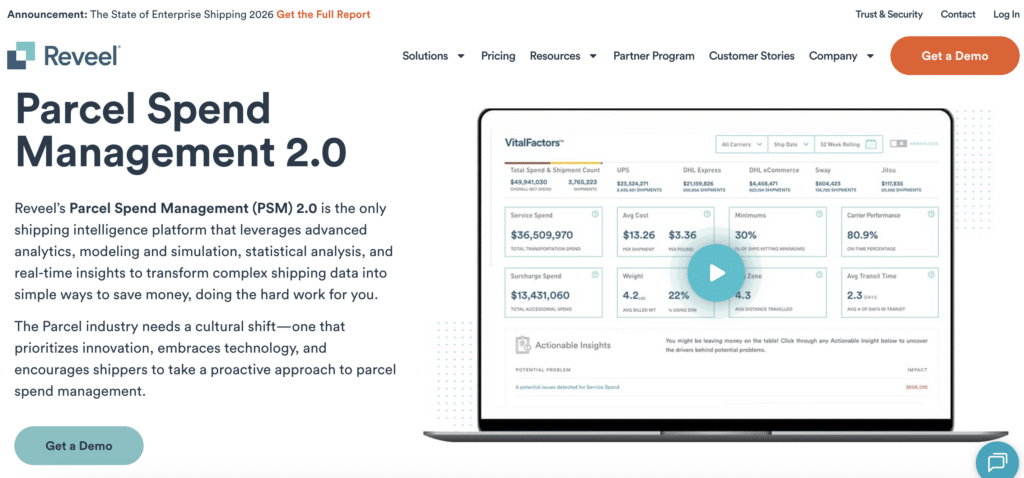
Reveel is built around Parcel Spend Management 2.0, an approach that goes beyond one-time invoice recovery and focuses on proactive analytics, carrier contract strategy, and ongoing optimization. Rather than treating shipping costs as a monthly cleanup task, the platform treats it as a discipline that shippers actively manage. That makes Reveel a strong fit for mid-size to enterprise shippers who prioritize technology, innovation, and a proactive approach to parcel spend.
At the center is Reveel IQ, an AI shipping analyst that understands data in the context of a shipper’s own profile rather than simply retrieving it. Teams ask questions in plain English, the way they would ask an analyst on their team, and get clear, data-backed answers without writing queries or building reports. Reveel IQ draws on package-level shipment and invoice data, so it can explain what happened, why it happened, and simulate what happens next when the variables change: GRI impact, surcharge exposure, service mix, carrier alternatives, and policy changes. Every answer is explainable, showing what changed, why, and where it is happening across shipments, lanes, and SKUs, and arrives as decision-ready output with visualizations, cost drivers, and recommended next steps.
Around that intelligence layer sit modeling and simulation for scenario planning, finance automation for invoice reconciliation, and carrier contract management for shippers running multiple carriers under different negotiated terms. For teams managing more than parcel, Reveel All Modes extends freight audit and payment across parcel, air, ocean, rail, less-than-truckload, and full truckload. Across the platform, users see an average 22% decrease in parcel shipping costs.
Reveel also runs one of the most complete parcel audit solutions in the category, covering all four audit types rather than a single slice:
- Rate audit. Most providers run rate audits manually and periodically, so a multi-million-dollar billing error can go undetected for months. Reveel’s industry-first front-end UI automatically re-rates every shipment against contracted terms, flagging discount and accessorial discrepancies in days, not months.
- Billing audit. Duplicate charges, invalid surcharges, and voids are easy to miss, and carriers will not flag them. Reveel incorporates order-level detail to generate customer-specific audits, with full visibility into recovered, pending, and denied disputes directly in the platform.
- Claims automation. Filing claims for lost or damaged parcels is time-consuming, and most teams lack the bandwidth to do it consistently. Reveel identifies eligible shipments directly from tracking data and in-transit scans, then handles documentation, filing, and tracking end-to-end. Teams can also submit additional claims found through customer service or internal processes for Reveel to file. Credits are recovered automatically, with no manual filing.
- Service audit. Missed delivery commitments go uncredited without the right tools. Reveel uses carrier tracking APIs to go beyond invoice data, detecting late deliveries and validating service guarantees to capture every eligible credit.
The Reveel platform supports 22+ carriers, so shippers can tap into multi-carrier visibility and strategy to improve their shipping operations.
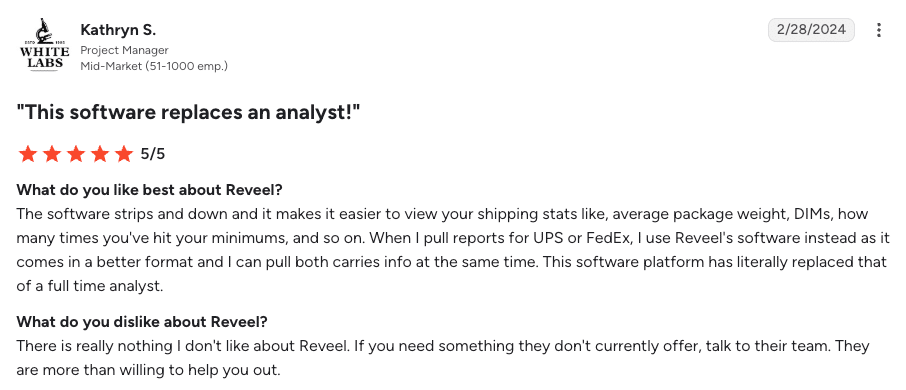
On review sites, Reveel users consistently point to the platform’s visibility and analytics depth and the responsiveness of its team as reasons they stay. The through line across capabilities is proactivity: Reveel is designed for shippers who want to get ahead of carrier costs rather than react to them one invoice cycle at a time.
2. Loop
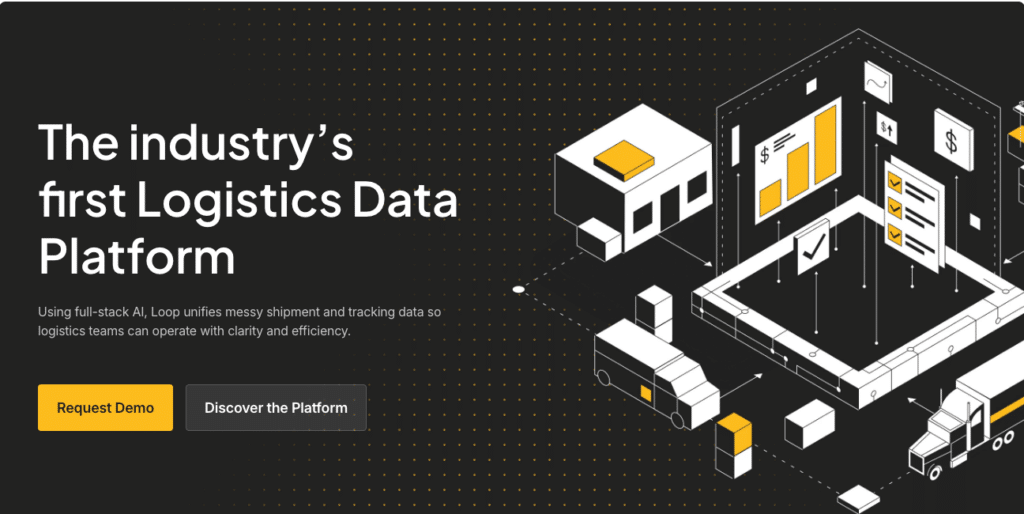
Loop is a logistics data platform built for transportation teams whose core problem is fragmented, inconsistent data spread across carriers, TMS and ERP systems, emails, PDFs, and spreadsheets. Its AI data normalization layer unifies those sources into a clean foundation that can be audited, analyzed, and acted on.
On the parcel side, Loop provides invoice auditing, real-time visibility, contract optimization, and scenario planning, with an AI Exception Agent that automates the routing of billing exceptions. Coverage spans parcel, LTL, FTL, ocean, and air, and the platform’s 2025 merger with Data2Logistics deepened its freight audit and payment footprint. Loop is a good option for shippers that want a unified data foundation across multiple transportation modes rather than a parcel-only tool.
3. Sifted

Sifted describes its product as an always-on logistics analyst: a mostly self-serve SaaS platform that continuously monitors carrier data, normalizes charges across 18 carriers, and surfaces cost and service risks in real time.
Their latest SiftedAI Copilot adds an agentic AI layer on top of audit and analytics, offering scenario modeling and recommendations based on a shipper’s own data. The platform is focused on parcel, rather than all-modes and freight. Sifted can be a good option for parcel shippers interested in AI-driven parcel intelligence and proactive monitoring rather than periodic invoice review.
4. Intelligent Audit
Intelligent Audit has been an audit and analytics specialist for 29 years and operates at enterprise scale, auditing 2.1 billion shipments last year. Its software has AI capabilities that identify irregular billing patterns and cost anomalies that standard audit checkpoints can miss.
Beyond audit and recovery, the platform adds business intelligence, network modeling, contract management, and carrier payment workflows through a TriumphPay integration, so audit and payment live in one place. That combination makes Intelligent Audit a strong fit for enterprise logistics and finance teams that need a complete multi-modal audit layer alongside carrier payments.
5. TransImpact
TransImpact aims to deliver intelligent transportation and supply chain solutions that help companies reduce costs, increase visibility, and strengthen profitability. Founded in 2008 by former UPS executives and later expanded through its 2022 Avercast acquisition, it pairs its Parcel Spend Intelligence platform with a consulting layer, working directly with clients on carrier contract strategy rather than only surfacing data for the client’s team to act on.
The platform provides margin analysis by SKU, product line, business unit, and geography, along with cost-variance alerts that flag spending deviations before they appear in monthly reports. A 60-day free trial using real customer data, with clients keeping the savings generated during the trial, makes it low-risk to evaluate. TransImpact can be a viable option for larger shippers that want expert-led contract strategy alongside audit and analytics.
6. Green Mountain Technology

Green Mountain Technology is built for high-volume parcel shippers with complex networks whose scale exceeds what most software-first platforms address. It combines parcel spend management software with expert-led strategy, network planning, optimization modeling, and predictive analytics, in a model designed for enterprises with hundreds of millions of dollars in annual parcel spend.
Green Mountain’s site reports $541 million in client savings and 1.6 billion shipments processed across its client base, indicators of a platform proven at genuine enterprise scale, with consultants actively involved in client decisions rather than only delivering reports. Green Mountain can be a viable option for complex operations that want a strategic partner for parcel cost management over a multi-year horizon.
7. Shipware
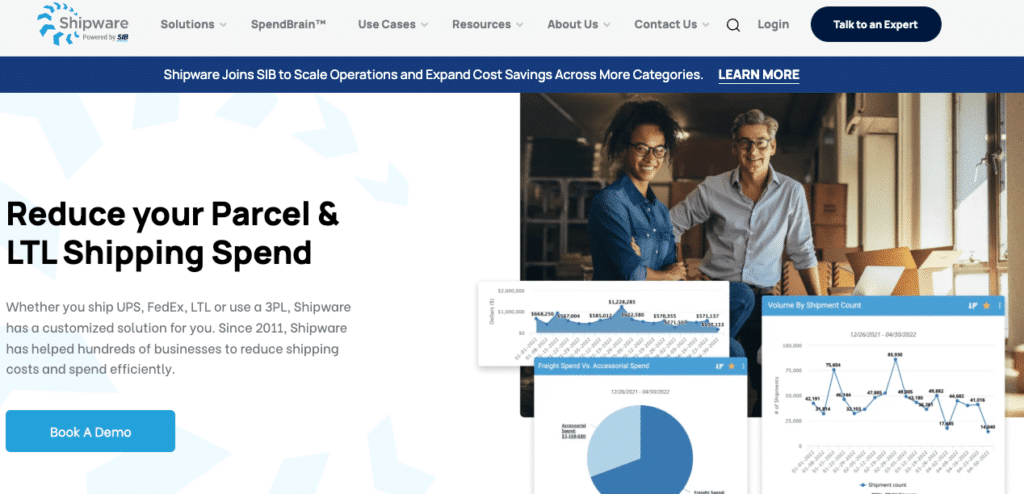
Shipware offers a parcel spend management portal that consolidates carrier data, shipping KPIs, and advanced analytics into a single view for operations and finance teams. It’s designed to sit alongside the company’s other offerings, parcel audit, parcel pay, and carrier contract optimization, so shippers can move between spend monitoring, invoice processing, and contract work in one relationship.
The Spend Management Portal provides a consolidated carrier view, predefined and custom analytics, a rate-increase calculator for modeling the impact of carrier GRIs, and a 30-day free trial. Delivered on a consulting-led, contingency model, Shipware can be a good fit for mid-to-large shippers that want outcome-based pricing and expert-managed contract support.
8. Broussard Logistics

Broussard Logistics specializes in parcel and freight bill audit and transportation management for manufacturers, distributors, and retailers. Its proprietary transportation management system supports meticulous parcel and freight invoice audits, parcel service-failure refunds, LTL contract optimization, and freight claims management, integrating with existing ERP and WMS systems.
Pricing is contingency-based, so there are no fees unless recoveries are secured, which lowers the barrier to getting started. With a hands-on, service-led model and a team whose experience spans both shipper and carrier sides, Broussard can be a strong fit for industrial and distribution shippers that want a responsive, managed partner across parcel and freight.
9. Enveyo
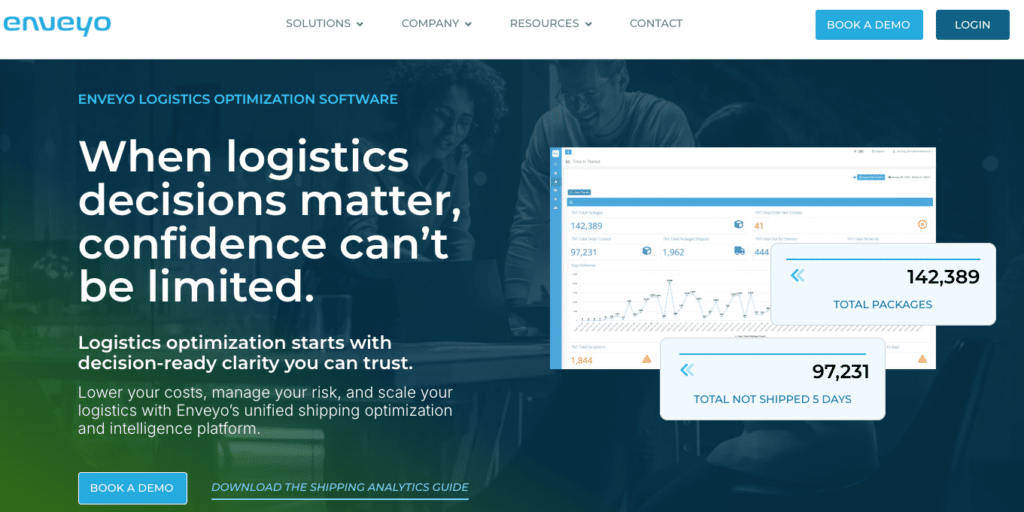
Enveyo is a modular logistics optimization platform for both shippers and 3PLs. Its five modules span analytics, shipping simulation, multi-carrier execution, tracking, and audit, so teams can move from analysis to modeling to execution in one platform.
Enveyo’s standout capability is logistics simulation: teams can model carrier mix and service-level scenarios against real shipment data before making operational changes, removing guesswork from decisions like consolidating carriers or shifting service levels. Its automated audit module is designed to catch billing errors early, and the platform’s pricing model offers unlimited users, carriers, and transactions. Enveyo can be a good option for data-first shippers and 3PLs that want analytics and execution connected in a single, scalable platform.
How Do You Choose the Right Parcel Spend Management Platform?
No single platform is best for every shipper. The right choice comes down to matching a platform to the operation’s scale, modes, and the primary problem it needs to solve. Start by answering 3 questions:
- Software-led self-service or expert-led managed support? Some teams want a platform they drive themselves, with analytics and audit running in the background. Others want consultants who sit in on carrier decisions and manage the work. Sifted and Enveyo sit toward the software-led end; Green Mountain, Broussard Logistics, and Shipware lean toward managed, expert-led engagement; Reveel, TransImpact, and Intelligent Audit blend both.
- Parcel only, or multi-modal? A parcel-heavy shipper with no freight complexity needs different coverage than an operation managing parcel alongside LTL, FTL, ocean, and air. Reveel All Modes, Loop, Intelligent Audit, and Enveyo extend past parcel; others concentrate solely on parcel depth.
- Immediate recovery, or ongoing optimization? Recovering refunds from billing errors is the fastest return and a fine place to start. Reducing what a shipper spends in the first place, through analytics, contract strategy, and modeling, is the larger, longer-term prize. The strongest programs do both, starting with recovery while building toward proactive control.
Define the highest-impact problem first, then shortlist the platforms built to solve it. A team sitting on unrecovered service credits may not need a modeling suite on day one, and a shipper heading into a carrier contract cycle may need more than automated refund claims.
Take Control of Parcel Spend
Parcel costs will keep climbing through compounding rate increases and shifting surcharges, and the shippers who stay ahead treat spend management as an ongoing discipline rather than a yearly cleanup. The right platform turns carrier data into decisions, recovering what is owed today and preventing overspend tomorrow.
To see how Reveel brings audit, analytics, modeling, and all-modes freight audit and payment into one AI-driven platform, request a demo and find out how much your operation could save.
Frequently Asked Questions
Is parcel spend management software necessary for high-volume shippers?
Yes. At scale, carrier invoices carry systematic billing errors and accessorial charges that are effectively impossible to catch manually, and the cost of missing them compounds with every invoice cycle. Parcel spend management software audits every shipment, recovers eligible refunds, and surfaces the spend patterns that inform carrier strategy, turning a reactive process into a controllable one.
Can parcel spend management identify hidden shipping fees automatically?
Yes. Strong platforms analyze every shipment against contracted terms and automatically flag invalid surcharges, duplicate charges, dimensional weight discrepancies, and misapplied accessorials that would otherwise go unnoticed. The best tools also explain why a fee appeared and where it is recurring, so shippers can address the root cause rather than catching the same error repeatedly.
What are the benefits of carrier contract monitoring for large shippers?
Carrier contract monitoring compares actual invoices against negotiated rates and terms, surfacing the gap between what a large shipper agreed to pay and what the carrier actually billed. Over time, that gap widens without active monitoring, as discounts erode and accessorials are reclassified. For large shippers, catching those discrepancies protects hard-won contract terms and prevents avoidable spend from accumulating across high invoice volumes.
Which parcel spend management platforms provide the deepest insights?
Platforms that pair audit data with analytics and modeling tend to deliver the deepest insights. Reveel, through Reveel IQ and its modeling and simulation tools, focuses on turning shipment and invoice data into decision-ready analysis rather than static reports. Reveel’s platform works at the package level and can simulate what happens when variables change.
How much can parcel spend management software save?
Savings vary with carrier mix, shipment volume, error frequency, and whether contract strategy is included alongside audit. Across the Reveel platform, users see an average 22% decrease in parcel shipping costs. Actual results differ by shipper platform.
What is the difference between parcel audit and parcel spend management software?
Parcel audit checks carrier invoices for billing errors and service failures, then files for refunds. Parcel spend management builds on that recovery work and adds analytics, contract compliance monitoring, and scenario modeling to reduce total spend over time. Audit tells a shipper what went wrong last cycle; spend management helps prevent it and informs better carrier decisions going forward.
What are the most user-friendly parcel spend management platforms?
The most user-friendly parcel spend platforms are typically software-led platforms, such as Reveel, Sifted, and Enveyo, which are built around self-service. Reveel IQ, for example, lets teams ask questions in plain English and returns decision-ready visualizations and next steps without query-building.