
PLAN

Alternative Carrier Diversification

Know exactly where a second carrier saves you, and where it costs you.

A new carrier can lower your rates or raise your exposure, and the carrier contract alone won’t tell you which. Reveel models every carrier you’re evaluating against your actual shipment history, so you see the real tradeoffs before you commit to anything.

Reveel Optimizer: annualized volume flow from baseline carriers to the optimized carrier network

Model where diversification creates savings vs. exposure.

The carrier’s proposal may look good at a glance, but the question is whether it’s actually good for you. Reveel computes every proposed rate, surcharge schedule, and minimum charge threshold against your actual packages, not blended estimates, before you sign anything. The difference between what carriers propose and what Reveel computes has reached millions on individual contracts.

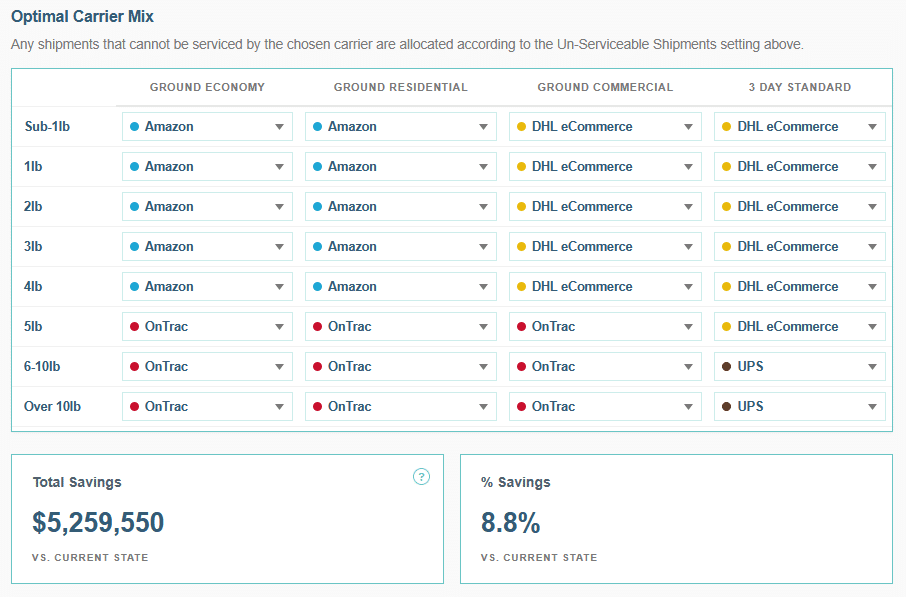
Optimal carrier mix by service and weight band with total savings versus current state

Make diversification a decision, not a gamble.

Most shippers diversify reactively: a service failure, a rate hike, or a capacity crunch forces the move, and the new carrier gets judged on whatever data is easiest to pull, usually a sample lane or a headline rate. Reveel holds the alternative carrier to the same standard as the incumbent, so you can back the move with your own shipment data.
See your whole carrier mix modeled side by side.

You don’t have to choose between speed and precision. Reveel models your actual shipment history against every carrier you’re evaluating, existing and prospective, at once. You see how a 70/30 split compares to 50/50, how a new regional carrier performs against your national carrier, and where a diversified mix actually reduces surcharge exposure versus where it just adds a vendor to manage.

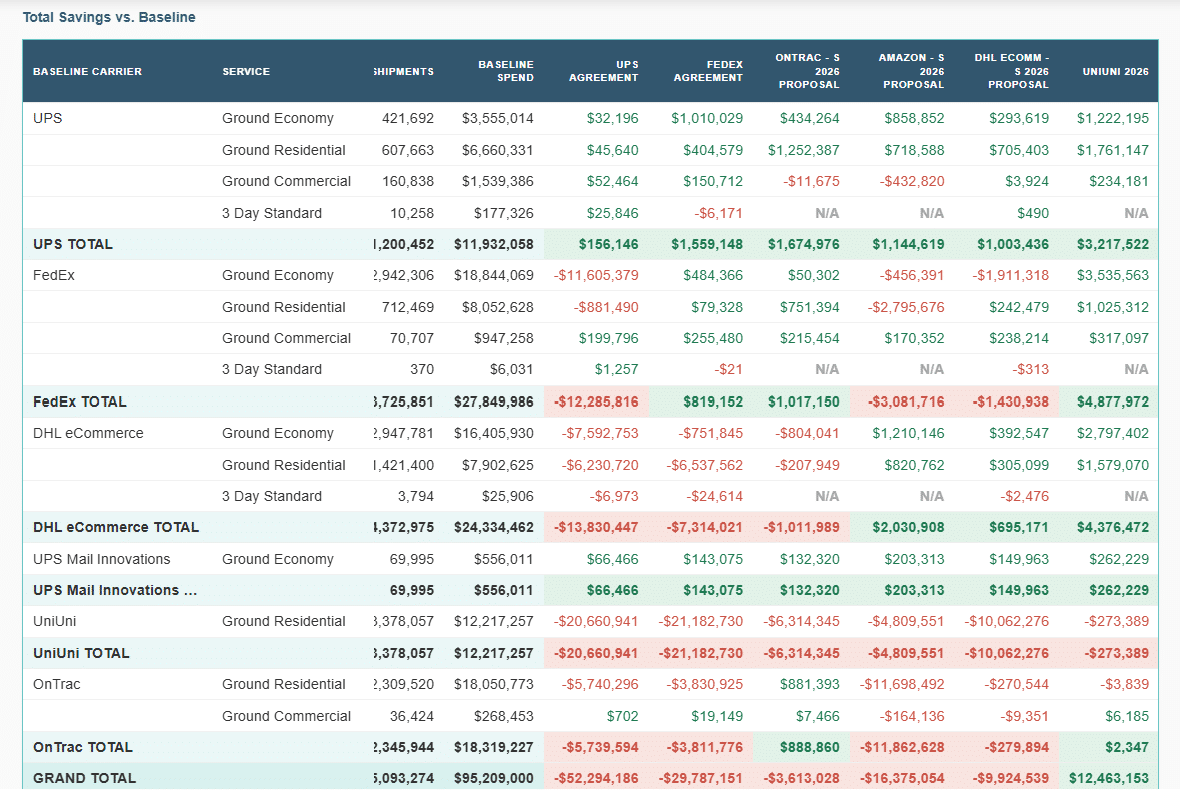
Modeled savings versus baseline across carrier proposals in Reveel

FAQs

Yes. That’s the point of running prospective and incumbent carriers together. Reveel applies a proposed carrier’s rates and terms to your actual packages, so you see how they’d perform on your real freight before you move a single shipment to them.

Both. Regional and alternative carriers are usually where diversification math gets hardest, because their zone coverage and surcharge structures differ from the nationals you’re comparing them against. Modeling them on your actual lanes is how you find where a regional partner genuinely wins versus where it just looks cheaper on the headline rate.

Ongoing. Rates change, carriers add surcharges, and your volume shifts across lanes over time — so a split that was optimal at signing can drift. Reveel re-models the mix as those inputs move, which keeps the diversification decision current instead of frozen at the moment you made it.

Every term, not just base rates. Surcharges, accessorials, minimum charge thresholds, and dimensional weight rules are where the real cost difference between carriers usually hides. Comparing carriers on base rates alone is how shippers end up surprised by the first few invoices after a switch.

Moving volume to a second carrier can shift you across revenue tier thresholds with your incumbent, which sometimes changes your effective rates on the volume you keep. Reveel factors those tier effects into the comparison, so the savings you model on the new carrier account for what diversifying does to your existing carrier contract.